



When your business needs more than a website
A website usually explains an offer and helps a visitor enquire or buy. A web application lets someone complete an ongoing task: manage information, review a dashboard or move work through a process. That changes what needs to be designed, built and supported.
Start with the problem rather than a list of features. Who uses the tool, what are they trying to finish, and where does the current process break down? A clear answer makes the first version easier to prioritise.
- Customer portals: let customers find agreed information or follow a task without another email exchange.
- Business dashboards: bring relevant information into a useful working view.
- Internal tools: replace repeated manual steps with an agreed workflow.
- Digital products: test a focused service with the people it is intended to help.
A real example: NegoTrack
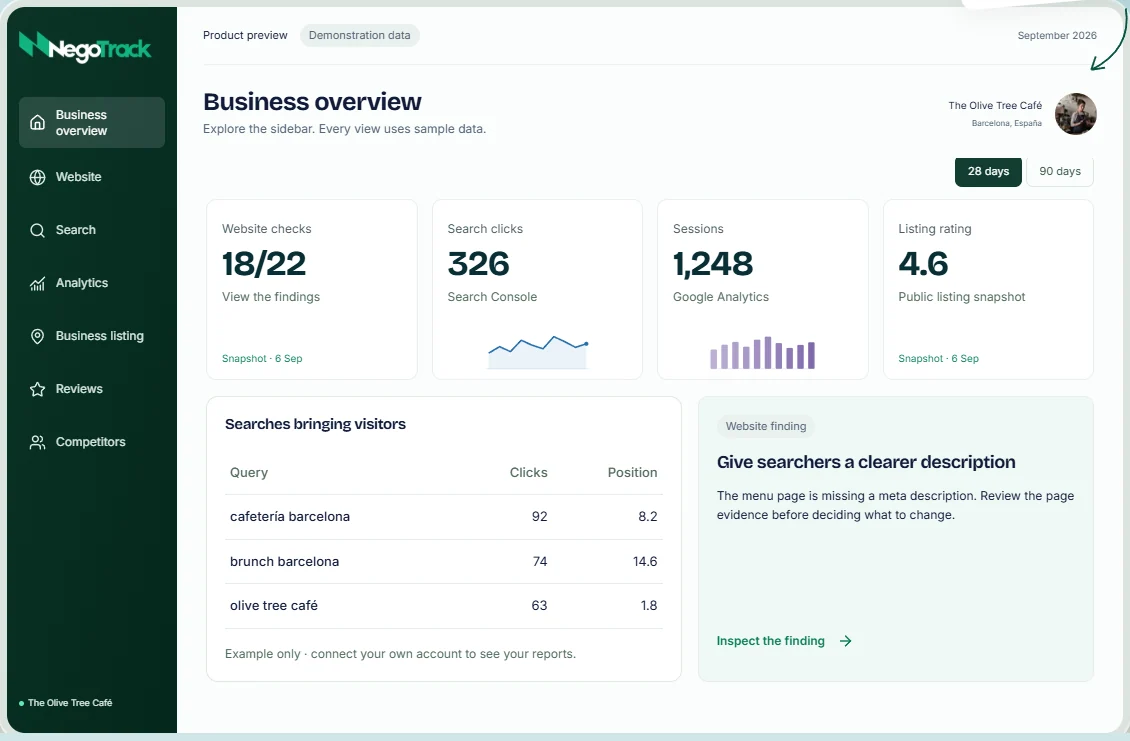
CodingPie created NegoTrack through branding, design and development. CodingPie and NegoTrack are official partners. Its public presentation and dashboard demonstration show how a product identity, interface and explanation can work together.
The preview uses example business information. Read the case study for the actual scope and product context; a demonstration is different from a live customer account.
Make the first release small enough to test properly
Define one complete journey before expanding the product. For a portal, that might mean signing in, finding a record, completing an action and seeing a useful confirmation. An impressive dashboard is less valuable if the everyday task remains unfinished.
| Decision | What to agree |
|---|---|
| Users and access | Who can see or change each type of information, including account administrators. |
| Information | Where data comes from, what must be stored and who owns it. |
| Integrations | Provider access, documentation, costs and a fallback when a dependency fails. |
| Success | Observable tasks that must work before the first release is accepted. |
From a working brief to a supported application
- Discovery: map the users, current workflow, essential screens and decisions that affect scope.
- Design: explore the interface, navigation and important states, including empty results and errors.
- Development: implement the agreed journeys and integrations in reviewable stages.
- Verification: test the intended tasks, access rules, mobile layouts and failure paths against the acceptance criteria.
- Handover: agree deployment access, account ownership, documentation and the ongoing support arrangement.
A specific quote for a specific product
A bespoke application is quoted separately from a standard brochure website. User roles, data migration, integrations and the complexity of the workflows matter more than a simple page count.
Bring your existing process, a sample of the information involved and the most important user journey to the first call. Avoid sharing private customer records; an anonymised example is usually enough to explain the problem. We can then discuss the work needed to define the build.
- Confirm hosting, third-party subscriptions and usage costs separately from the development fee.
- Agree who operates the application after launch and how changes and incidents are handled.
- Set delivery milestones around confirmed dependencies and feedback, rather than assuming a universal turnaround.
